
Eight polishing stations sound like plenty. On the factory floor, the number only helps if the work is divided properly. If station one is still trying to remove deep forming marks and station seven is correcting scratches left upstream, the line is busy without being efficient.
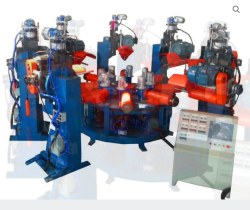
The DHZPW-800 disc-type eight-station automatic outside polishing machine gives a cookware factory enough stages to separate cutting, refining and finishing. The important part is deciding what each head is supposed to do.
Start with the ugliest part, not the nicest sample
When a cookware polishing machine is demonstrated, the sample is often already fairly clean. Production parts are not always like that. Draw marks can be deeper, weld areas may vary and an upstream trimming issue can leave one edge harder to polish.
Run the machine with the parts your operators complain about. If a difficult saucepan needs two passes or manual touch-up, put that into the cycle-time calculation.
Abrasive sequence matters here. A coarse wheel should remove defects without digging fresh valleys into thin stainless steel. The next stages need to erase the previous scratch pattern, not simply make the same scratches shinier.
Zhendong Technology also builds punching, riveting and other cookware equipment, which is useful when a polishing problem is actually being created earlier in the production route.
Watch the reflection while the fixture is moving
Mirror-finish stainless steel is brutally honest. A small vibration, uneven clamping or off-centre fixture can leave a band that shows immediately under overhead light.
Do not inspect only one side of one pan. Mark a batch, run it through the full shift and compare the finish around the whole circumference. If the defect always appears at the same angular position, look at fixture repeatability before blaming the compound.
Wheel wear also changes the process during the day. Record how long a wheel remains stable before dressing or replacement. A machine that makes a beautiful first fifty pieces and drifts after lunch is not yet a stable process.
There is another practical number worth tracking: pieces that need hand rework. A fast automatic cycle can still lose money if someone stands beside the line correcting edges with a handheld tool.
When comparing equipment, ask for output under your finish standard, with normal wheel changes and normal operator intervention included. That number will be less impressive than the showroom cycle time, but it is the one production planning can actually use.