

Furnace designers sometimes get pushed toward a simple answer: use the highest-grade refractory and the furnace will last longer. Glass furnaces do not behave that neatly.
A throat, a glass-contact sidewall and a crown do not see the same chemistry or mechanical load. Putting premium material everywhere can raise the rebuild cost without solving the actual wear mechanism.
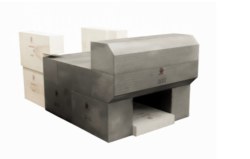
Fasin’s fused cast high-zirconia brick is aimed at demanding applications such as LCD substrate glass, borosilicate, high-alumina glass and other special compositions. These are places where refractory contamination can be as serious as refractory loss.
Follow the glass attack
When reviewing glass furnace refractory materials, start with where glass velocity, temperature and chemical attack are highest. A block that performs well in static laboratory corrosion testing may see very different wear in a flowing throat or narrow channel.
High-zirconia material earns its place when reduced corrosion or lower glass contamination protects yield. In a less severe zone, a different refractory may provide perfectly adequate life at a more sensible cost.
Fasin Group supplies AZS, high-zirconia and other refractories for glass furnaces. The useful discussion with a supplier is therefore zone by zone, with glass chemistry and operating temperature on the table.
Joints can undo a good material choice
Two excellent refractories can still create a poor interface. Thermal expansion differs, glass penetration can follow a joint, and local cooling can make the temperature profile quite different from the centre of the block.
Installation drawings deserve the same attention as chemical composition. Check block tolerances, expansion allowances and the transition between grades. If installers have to grind or pack large gaps on site, the furnace is already starting from a compromised geometry.
References also need context. A long campaign in soda-lime float glass does not automatically predict performance in borosilicate or high-alumina glass. Ask what glass was melted, where the material was installed and what actually ended the campaign.
For a rebuild, I would rather see a map showing why each grade is used in each zone than a specification that simply upgrades everything. It is easier to defend technically, easier to budget and much easier to investigate later if one area wears faster than expected.