

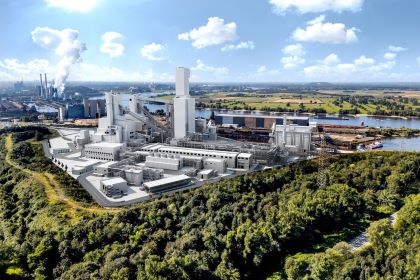
Thyssenkrupp Steel has received a final decision revising public funding terms for its tkH2Steel project in Duisburg. The changes give the company more flexibility to scale up hydrogen use at its planned direct reduction plant in line with market conditions.
The revision was prompted by slower-than-expected growth in the hydrogen market. Production capacity, transport infrastructure and import routes remain insufficient, while green hydrogen is considerably more expensive than anticipated when the original funding decision was made. The European Commission had previously confirmed that the changes comply with EU state aid rules.
Under the new terms, the company can gradually increase the share of hydrogen used at the plant, depending on availability, economic feasibility and customer demand. The facility is designed to run on natural gas, hydrogen or a blend of the two. Thyssenkrupp Steel says operating it solely on natural gas would cut emissions by more than 50% compared with current coal-based blast furnace steelmaking. Its long-term goal of switching entirely to hydrogen remains unchanged.
The company is preparing a new tender for long-term hydrogen supplies and expects to launch it shortly. Once operational, the plant could become one of Europe’s largest industrial hydrogen consumers.
Construction of the direct reduction plant and two associated melters is continuing at the Duisburg site. The complex is planned to produce 2.5 million tonnes of directly reduced iron annually and will be capable of running entirely on hydrogen. According to Thyssenkrupp Steel, the project could reduce carbon dioxide emissions by up to 3.5 million tonnes a year.
There are no comments yet.