

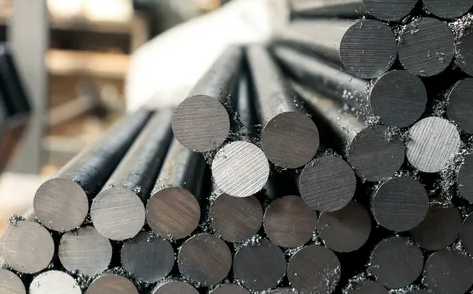
With the growth of DRI production and planned projects, especially in the Persian Gulf region, the availability of high-quality DR pellets was among the most discussed topics during the Middle East Metallurgy Conference (MEIS) held in Dubai this week.
DR capacity in the MENA region (excluding Iran) is expected to add 21-23 million tons in the next two to three years if all major projects start on time, bringing the total capacity to 55 million tons of LPG/HBI per year, according to Kaushalendra Prasad, director of Star Global. As a result, the demand for DR pellets in the MENA region is likely to reach 85-90 million tons, while the existing pellet production capacity in the region is about 33 million tons, he added. This signals an expected shortage of supply in the DR pellet market in the coming years and that the market will need both local production and imports.> To cover the additional needs of 30-40 million tons of DR pellets, according to Mr. Prasad, global pellet suppliers are working to increase capacities. Renato Hendriksen, head of strategic marketing at Brazilian mining company Samarco, said during a panel discussion on pellets that Samarco's plan to achieve 26 million tons of pellet production in 2028 out of 15-16 million tons expected in 2025 is ongoing. But despite the favorable environment, pellet producers face many challenges, and the participants in the MEIS discussion agreed that the type and quality of iron ore are among the main ones. Renato Hendriksen from Samarco said that now, with the change of quarries, more and more companies are faced with the need to enrich ore with a content of 40-45 percent Fe to a base 67 percent Fe in the feed fines into pellets, while in the crude iron ore extracted earlier, the iron content reached 60 percent. "The resources of high-quality ore are depleted, so enrichment is more important, and the conversion of 40 percent fine Fe to 65 percent has become the new norm," Prasad said. Another problem is logistics. Sergio Espechit, who is responsible for strategic business development at Brazilian mining company Bemisa Holding, noted that logistics costs sometimes exceed mining costs because "we don't choose where the ore is located." Bemisa Holding, which produces 3.5 million tons of high–quality pellets per year, is going to launch a new mine to expand its capacity (potentially up to 15 million tons of pellets with an iron content of 70.4%) in late 2028 - early 2029. Other challenges faced by pellet producers in Brazil include, —

There are no comments yet.