

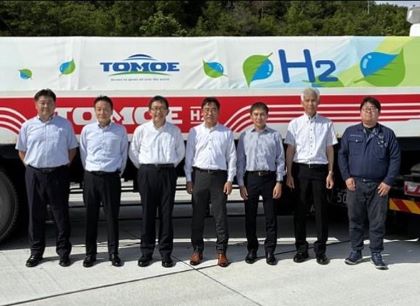
Japanese steel company JFE Steel has announced that it has successfully produced a prototype of reconstituted cast iron using environmentally friendly hydrogen for the first time, marking an important milestone in the country's efforts to reduce carbon dioxide emissions from steelmaking.
This achievement was achieved within the framework of the Green Innovation Fund Project of the Organization for the Development of New Energy and Industrial Technologies (NEDO) on the use of hydrogen in steelmaking processes, which focuses on the development of direct hydrogen reduction technology using only hydrogen. The prototype was manufactured using green hydrogen supplied from hydrogen production, developed as part of the construction project of the Society for the Development of under-hydrogen technology, and a direct hydrogen reduction test building built as part of the steel smelting project.
GREINS consortium supports the development of steelmaking водорода
The steel industry accounts for approximately 14 percent of Japan's total carbon dioxide emissions, making it the largest industrial emitter in the country. To solve this problem, Nippon Steel Corporation, JFE Steel Corporation, Kobe Steel, Ltd. and the Japan Metals Research and Development Center (JRCM) formed the Hydrogen Steel Consortium (GREINS) in 2022 to develop technologies aimed at significantly reducing carbon emissions.
The project combines technology development with preparation for commercial implementation and involves cooperation with numerous domestic research institutes. As part of the project, two direct test reduction facilities of various scales and specifications were built, with technology development in fiscal year 2024.
experimental verification produces one ton of recovered железа
in the software tests Hydrogen reduction was carried out between June 29 and July 1 at a small experimental installation with a capacity of 15 kg/hour located at the JFE Steel plant in Eastern Japan (Chiba region). During the tests, approximately one metric ton of recovered iron was successfully produced, which confirmed the possibility of stable recovery of iron ore using environmentally friendly hydrogen.
Looking ahead, NEDO stated that it would continue to support the project to accelerate iron production. industrial implementation of direct hydrogen reduction technology. However, the organization noted that achieving carbon neutrality in the steel industry would also require the provision of large amounts of low-cost hydrogen and the development of technologies such as carbon capture, recovery, and storage (CCU) through collaboration with industries unrelated to steelmaking.

There are no comments yet.