

The German Automobile Suppliers Association ArGeZ expressed support for the European Commission's proposed Industrial Acceleration Act (IAA), arguing that the initiative could strengthen Europe's industrial base, expand production capacity, and accelerate decarbonization in all strategic sectors..
According to the association, geopolitical uncertainty, increasing dependence on the supply chain, and large-scale industrial policy programs in the United States and China have increased the need for a more strategically oriented European industrial policy. Argez said that the European rules on granting preferences are justified, especially when it comes to public financing, provided that the measures remain appropriate and proportionate.
Since then, imports of Chinese automotive components have doubled. 2019
Argez highlighted the growing competitive pressure on European car suppliers, noting that imports of automotive components from China to the EU have doubled since 2019, while exports from the EU have shown only limited growth. Against this background, the association believes that the European system of preferences is necessary to ensure the competitiveness of manufacturers operating in the EU and preserve the creation of added value in industry.
According to the proposed IAA, government procurement and financial support will increasingly favor products produced in Europe and associated with lower carbon dioxide emissions. газа.
' "Made in Europe" rules can support strategic отрасли
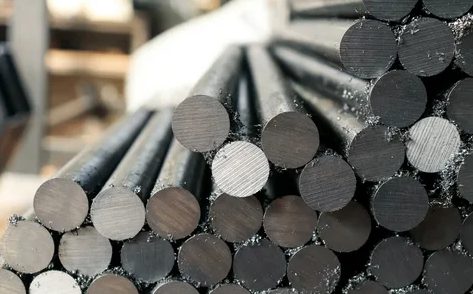
According to Argez, the "Made in Europe" approach can strengthen European value chains and employment, while supporting the transition to a climate-neutral economy and contributing to the preservation of technological expertise in the EU. The Association identified the production of steel, aluminum, rubber, automobiles, and future technologies as strategic industries that could benefit from the proposed procurement criteria.
Argez stressed that local content requirements should be applied not only to finished products, but also to their components, which will preserve a large share of industrial value creation in Europe. While supporting the European rules of preferences, Dargez warned that their implementation should not create excessive administrative problems. a burden for producers. The association called for the creation of realistic and achievable requirements for local content and stated that digital supply chains can simplify compliance and documentation, especially in complex industries such as automotive.
Content from third countries should not automatically qualify as a source from ЕС
Argez also raised the issue of how origin from the EU should be determined in accordance with the proposed framework. According to this, the existence of a free trade agreement, a customs union, or a procurement agreement with the EU should not automatically mean that content produced in a third country is equivalent to materials produced in the EU. Instead, such an approach should depend on clear and appropriate WTO requirements conditions, including reciprocity and comparable carbon costs, as well as sustainable development standards.




There are no comments yet.