

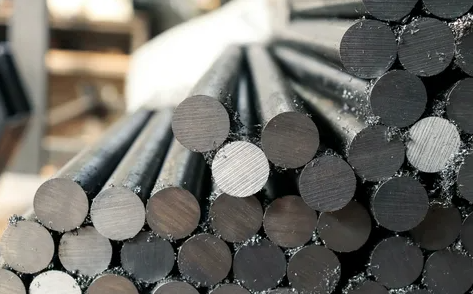
Swedish iron ore producer LKAB has released financial and operating results for the second quarter and the first half of this year.
In the second quarter, the company generated a net profit of SEK 697 million ($73.11 million), compared with a net profit of SEK 1.52 billion in the second quarter of 2025, sales revenue decreased by 8.1% year-on-year to SEK 7.19 billion ($754.11 million), mainly from- for foreign investments. currency effects, especially related to the currency hedging of the US dollar. In addition, LKAB recorded an operating profit of SEK 63 million ($6.61 million), down 94.1% from SEK 1.07 billion in the same period last year, amid lower sales revenue and increased energy and maintenance costs.
In this quarter, the company's iron ore production amounted to 6 million tons, an increase of 3.4%, while iron ore shipments decreased by 1.6% to 6 million tons year-on-year. Despite geotechnical problems at the Kiruna mine, LKAB maintained production levels and ensured the operation of all its processing plants during the quarter. Meanwhile, disruptions in the Middle East and the Strait of Hormuz affected supplies, although the company mitigated the effects by redirecting supplies to other customers, markets and ports.
Meanwhile, in the first half of the year, LKAB's net profit amounted to SEK 1.42 billion ($148.93 million), which is 66.9 percent less than the SEK 4.30 billion net profit recorded in the first half of last year Sales revenue decreased by 13.5 percent year-on-year to SEK 15.09 billion ($1.58 billion). The company's operating profit for the first six months of this year amounted to SEK 923 million ($86.90 million), which is 80.4 percent less than SEK 4.71 billion for the same period in 2025. The decrease in sales revenue was driven by the strengthening of the Swedish krona, lower iron ore prices and supply volumes, while higher electricity prices and increased costs also affected operating profit.
During the period under review, LKAB's iron ore production remained unchanged by 12.5 million tons compared to the same period last year, while iron ore shipments decreased by 2.4% to 12.3 million tons. The conflict in the Middle East and the periodic closure of the Strait affected supplies to Hormuz as some customers did not have, or had limited opportunities, to receive поставки.
Regarding market conditions, LKAB stated that the global steel and iron ore market continues to be characterized by an uncertain geopolitical situation in the second quarter, especially amid the conflict in the Middle East. Global crude steel production remained unchanged year-on-year, while China's output declined slightly and Europe's. The average spot price for iron ore containing 65% Fe rose to $122 per tonne in the second quarter from $108 per tonne in the same period last year.
Regarding forecasts, LKAB said that geopolitical and global economic uncertainty remains high amid tariffs, import restrictions and ongoing conflicts. The company noted that the changed production conditions at the Kiruna mine may lead to the temporary closure of the processing plant in the fall., this may affect production and supply volumes in 2026. Nevertheless, LKAB expects long-term demand for its products, in particular for high-quality iron ore pellets, to remain high, given their role in the transformation of the steel industry.
There are no comments yet.