

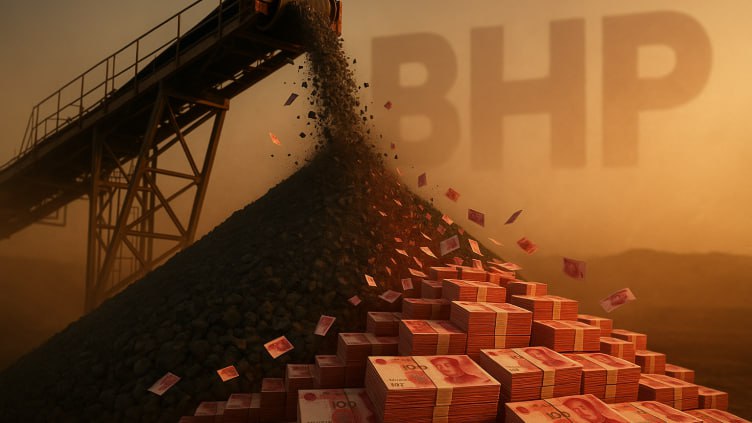
This time the situation has changed. By accepting settlements in yuan, BHP has strengthened its position both in terms of price and currency. The world's largest mining company has just helped Beijing take a step towards switching to a commodity system with prices in yuan.
This is how, imperceptibly and transaction by transaction, the monetary power in the world is changing.
There are no coincidences in time. The news came just before a high-level meeting between the United States and Australia in Washington. Australia's largest taxpayer and a strategic source of export revenue has just confirmed the exchange rate of the Chinese currency, while Canberra has confirmed the exchange rate of the Australian dollar. Politically difficult, but commercially important.
The White House will not miss this signal. Even its closest allies are now making payments in the currency of a rival bloc. China already dominates the refining and processing of rare earths. What he lacked was control over his calculations. Invoicing in yuan closes this cycle.
The company demonstrated the other side of the system by issuing yuan-denominated bonds on the Chinese interbank market two months ago. Cheap financing, high liquidity and eager buyers. Western capital cannot compete. Taken together, BHP's trading calculations and Fortescue's bonds indicate that trade and finance are beginning to align with China's monetary system.
BHP's long-term contracts for 2026 are still being negotiated in US dollars. As soon as spot liquidity increases, long-term calculations will follow. Rio Tinto and other companies will face commercial pressure to comply. Global traders will need opportunities to hedge in yuan. Banks in Singapore and Hong Kong will expand clearing in yuan. Gradually, the Australian export mechanism will connect to the Chinese financial system.
BHP's decision is not the only one. Saudi Arabia is already accepting yuan for oil. The BRICS countries are discussing a gold-linked trade settlement mechanism. The world is divided into two currency blocks. One of them revolves around the US capital markets, the other around trade flows in Asia. Australia, thanks to its mining, is gradually approaching the latter.
The dollar's dominance is weakening not because of the crisis, but because of convenience. From an economic point of view, the logic is clear. China is the buyer, and




There are no comments yet.