

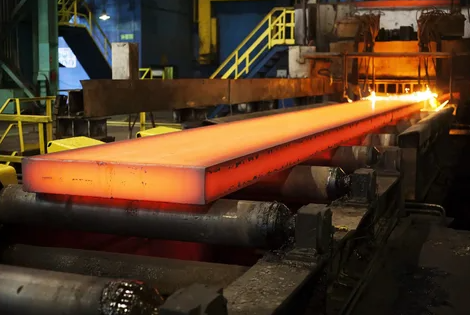
Now the steelworkers have to fend off several strikes at once. Due to the weak market conditions, demand for steel has fallen, and subsidized Chinese competitors are flooding the global market. As President Donald Trump shuts down imports to the United States, even more of this cheap metal is streaming into Europe. Additionally, German blast furnace plants are suffering from high energy prices. Expensive electricity also hinders the transition to environmentally friendly technologies.
Europe's current protective measures against cheap Chinese steel are insufficient
Even if the new measures come into force, 18 million tons of steel will still be supplied to Europe from outside Europe.
In addition, the price of electricity for industrial needs has been announced. "We urgently need help for energy-intensive industries. Including the steel industry," Thyssenkrupp said. Clear value-added targets for local production are needed. "If we invest in infrastructure now, it should eventually lead to the use of German and European steel." "If we use German taxpayers' money, then at least part of the production should be carried out in Germany, as of today the requirement may be 0 percent." In the event of a global "steel shock" without domestic steel production, the German economy faces a loss of up to 50 billion euros in annual added value. A scenario in which large steel exporters such as China significantly reduce their exports to Europe in a short period of time due to geopolitical conflicts or supply chain problems. German economists believe that long-term production of at least 40 million tons of steel per year is necessary to reliably meet demand. For comparison, Germany produced about 37 million tons of steel in 2024. One third of the demand is in the construction industry, 28% in the automotive industry and 13% in mechanical engineering. These industries could not exist without high-quality steel. And a lot of jobs depend on these industries: 4 million people are employed in steel-intensive industries, which accounts for about two thirds of all jobs in German industry.

There are no comments yet.