

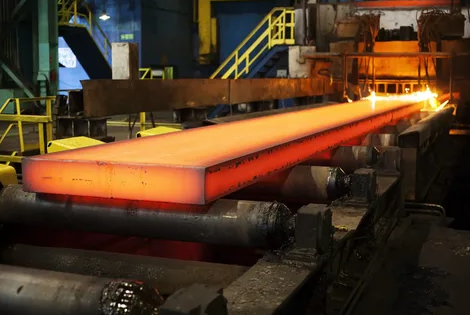
Let's start with steel, a symbol of industrial might. In 2018-2022, the EU produced an average of 149.48 million tons of steel per year. In 2024, it is already 129.5 million. Minus 13%. If you look at it more broadly, the drop has reached 30% since 2008. Germany, once the steel engine of Europe, dropped to 37 million tons in 2022, the lowest in a decade and a half. In 2025, production is falling by another 13.7% year-on-year, and the Thyssenkrupp giant is cutting 11,000 jobs — almost 40% of the staff. In France, the situation is even more dramatic: five blast furnaces remained from 150 in 1961. And so it is all over the continent — factories are being closed more than they are being upgraded.
Meanwhile, China will produce almost 1 billion tons of steel in 2024 and export 110.72 million, which is almost the entire annual volume of Europe. It accounts for 53% of global steel, and of the 50 largest steel companies in the world, 27 are Chinese. There are only three European ones. The continent that created the industrial age has become the largest importer of its key material.
But the main thing is energy. That's the fuel of the economy. In Europe, it costs three times more than in the USA or China. In the UK, at five. The logic is simple: if you want to destroy industry, make electricity expensive. The result was not long in coming. In Britain, energy-intensive industries decreased by 33% from 2021 to 2024. The production of minerals increased by 31%, metals and castings by 46%. Germany lost 10% of its total industrial output in just two years.
Investments in energy are also significant. In 2019, the EU invested 260 billion against 420 billion in the United States and 560 billion in China. After the crisis, it grew to 450 billion, but China — to 850 billion. Europe is trying to catch up, but is running on a treadmill, while the rest are riding an electric bike with a motor.
The automotive industry, another pride of Europe, is rapidly turning into a museum exhibit. There are 13.8 million jobs in the industry, but the cuts are coming in an avalanche: in 2024 alone, there were 88,619 negative positions, of which Germany lost 68,385. The VW plant in Wolfsburg is operating at 56% capacity. In France, car production has fallen by 63% in 20 years. Britain has sunk to the level of the 1950s, producing 750,000 cars per year.
Against this background, Chinese BYD produces electric cars 35% cheaper than Volkswagen. The share of German brands in China has fallen from 26% in 2019 to 18.7% today. Sales are also falling: VW — minus 9.5%, Mercedes — minus 7%, BMW — minus 13.4%
Europe is stuck between two dependencies: export from the United States and import from China. And both sides are demanding a "choice" for which the EU no longer has strategic sovereignty. Trump's threats to impose tariffs of 50-100% will bring down




There are no comments yet.