

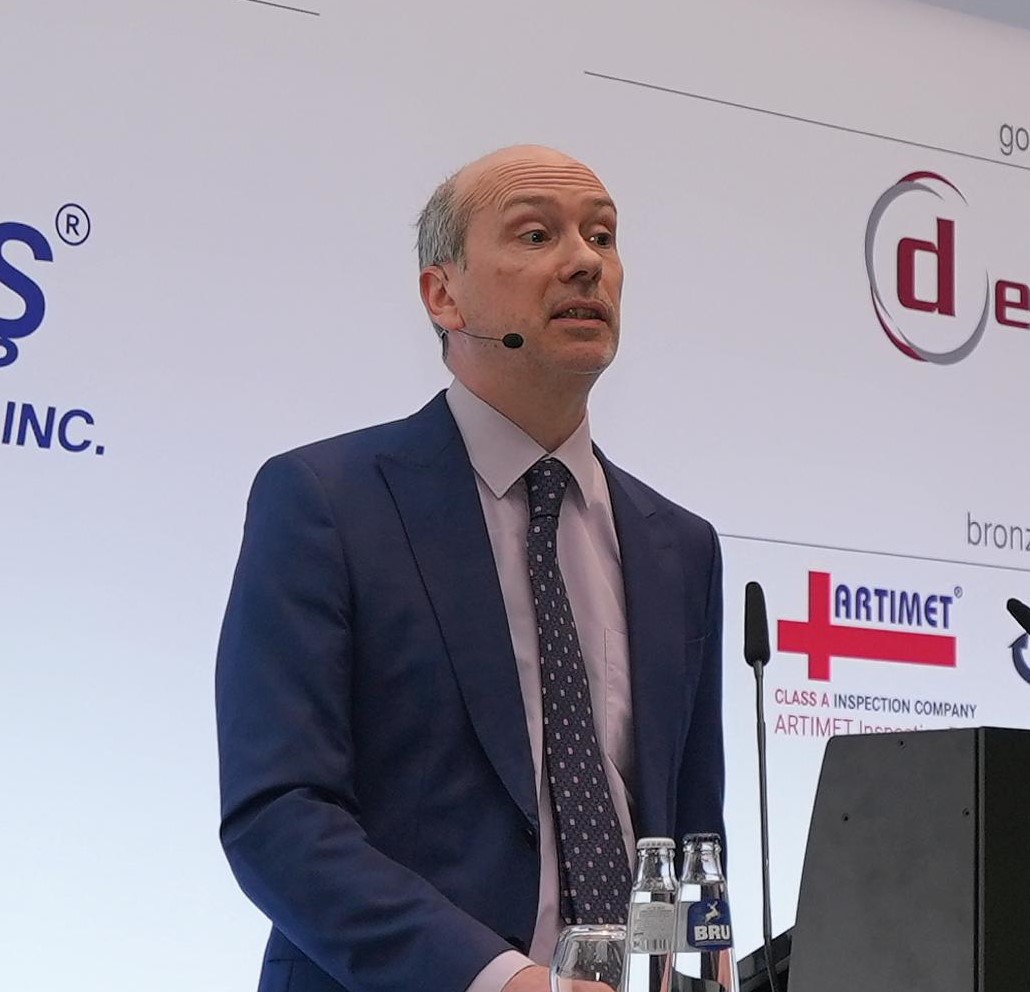
Speaking at the SteelOrbis Spring 2026 conference and the 94th meeting of IREPAS, taking place in Amsterdam on April 26-28, Patrice ollivo, an economist at the Organization for Economic Co-operation and Development (OECD), presented the OECD's latest interim economic forecast, highlighting growing downside risks to global growth amid geopolitical tensions and rising energy prices.
Mr. ollivo said the recent escalation of conflict in the Middle East was a key driver of global economic uncertainty, primarily due to its impact on energy markets. He noted that prices for energy commodities, including crude oil, refined products and gas, have risen sharply, mainly due to limited reserve capacity of producers, which does not allow them to compensate for supply disruptions. This has led to rising production costs and accelerating inflation around the world.
He stressed that the Strait of Hormuz remains a critical hub for global energy trade, accounting for two-fifths of oil and gas flows. Ongoing disruptions have severely limited maritime traffic, leading to supply disruptions, while commercial flights, although partially restored, remain well below pre-conflict levels.
The conflict's effects extend beyond energy, Mr. ollivo said, affecting a wide range of commodities and further adding to inflationary pressures. He noted that inflation has accelerated since the escalation and financial conditions have tightened, although they remain relatively favorable overall. At the same time, early indicators such as the Global Purchasing Managers' Index indicate a clear loss of economic momentum, with recent data showing a marked slowdown.
Growth Forecasts Revisited
Mr. ollivo also noted that the latest OECD forecasts indicate some revision in growth expectations for several major economies compared to the previous forecast. In particular, the euro area's forecast for 2026 was revised downward, with growth expected to be 0.8 percent in 2026 and 1.2 percent in 2027, while growth forecasts for the US economy were revised upward, now pointing to 2 percent growth in 2026 and 1.7 percent in 2027. Global GDP growth forecasts are 2.9 percent in 2026 and 3 percent in 2027. 2027
On the other hand, labor markets have so far remained broadly stable, with limited changes seen before the conflict escalated. Mr. ollivo also noted,




There are no comments yet.