

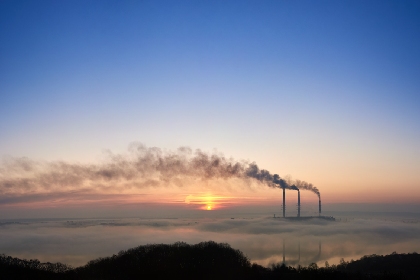
The South Korean government has announced its Korea Green Transformation Strategy (K-GX), which outlines plans to mobilize 1 quadrillion Korean won ($746.14 billion) in government and climate change financing between 2026-2035 to accelerate the decarbonization of industry, increase competitiveness, and support sustainable economic growth..
The Government will establish the K-GX Public-Private Council to monitor the implementation and coordinate further policy measures for the period 2026-2035. According to the strategy, the government plans to accelerate the transition to low-carbon production processes in five major high-emission industries, including the steel industry.
As part of the strategy, ten landmark projects will be implemented in cooperation with the private sector, with private investments totaling 220 trillion Korean won ($164.11 billion). These projects will focus on clean energy supply chains, decarbonization of industry, electrification of transportation, and green residential transformation.
300,000 mt hydrogen-based cast iron production facility planned by the company 2030
In the future of the steel sector, South Korea plans to demonstrate a hydrogen-based pig iron production plant with a capacity of 300,000 tons per year by 2030, with the aim of establishing industrial production of hydrogen-based pig iron and strengthening its position in the emerging market for environmentally friendly steel.
Among the participating companies, POSCO Holdings presented its plans to create a decarbonized industrial ecosystem in the steel sector. To support this transition, the government will assist in the establishment of hydrogen production centers and develop measures to ensure a stable supply of affordable electricity in accordance with corporate investment plans.
Renewable energy sources are planned to increase the energy capacity to 100 ГВт
Meanwhile, South Korea intends to increase its renewable energy capacity to 100 GW by 2030. The government plans to identify suitable locations for solar and wind energy projects, reduce the cost of generating electricity from renewable sources, and expand transmission infrastructure. Existing transmission lines will be upgraded to increase capacity, while direct current transmission and distribution technologies will also be developed.
The government will additionally support ten strategic "green" industries, including electric vehicles, batteries, solar and wind energy, small modular reactors, energy equipment, power semiconductors, heat pumps, hydrogen, as well as carbon capture, recycling and storage.
The government plans to allocate 790 trillion won to finance the fight against climate change климата
As for financing, the government plans to provide KRW with 200 trillion ($149.17 billion) in budget funds and at least 790 trillion Korean won ($589.29 billion) in financing to combat climate change. climate change over a ten-year period. Transition financing will be expanded to support decarbonization of high-emission industries..
In addition, the government plans to introduce tax incentives for the domestic production of key components and equipment used in solar, wind, and battery industries, along with regulatory reforms and accelerated approval procedures for companies developing green technologies.
There are no comments yet.