
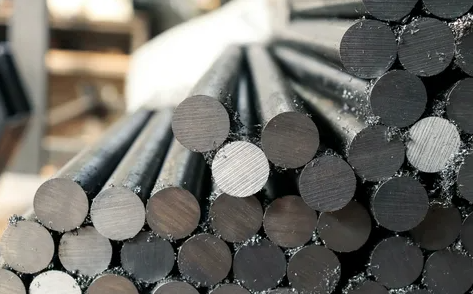
China is leading the metals markets, analysts said, eager to recover from the coronavirus pandemic, as trade tensions with Australia and the US could eventually drive up costs and curb growth.
As spot prices for iron ore close to $ 100 per tonne CFR in China this week, the shipping market has received support largely from a rebound in Chinese demand for the coronavirus, Colin Hamilton, head of commodities research at BMO Capital Markets, said in S&P Global Platts interview on Friday.
The decline in the availability of scrap metal in the domestic market previously contributed to higher pig iron prices in the first quarter, as well as global iron ore supply restrictions tightening the market, Hamilton said in an interview.
Markets are increasingly seeing the impact of the lockdown measures, he said, and the duration is not yet clear.
“We saw the impact on China as early as possible, and when we get out of the lockdown in China and the many restrictions there, the sentiment will actually be very positive,”
“The recovery in metals demand, fueled by strong policies and strong investment in fixed assets, was the strongest we have seen in recent years, and very surprising, while the rest of the world is experiencing a very weak demand environment today. "
Base metal prices have rebounded strongly on the back of China's imports over the past two months and a forward policy.
The supply of platinum and other precious metals has declined, Hamilton said, and demand has been supported by monetary policy in China.
The World Steel Association said Friday that pig iron prices in China rose 1.4% year-on-year in the first four months of the year to more than 271 million tonnes, while steel production rose 1.1 percent to 319 million tonnes.
Pig iron production declined over the same period in the markets of Europe, North and South America, Japan, India and South Korea.
Since these markets did not operate in furnaces, Hamilton estimates that China currently accounts for about 80% of the world's iron ore trade on a maritime scale, about 10 points more than the usual ratio.
Companies in markets such as Europe and Japan, mainly buying out contracts, have reduced their purchases of iron ore as steel production declined due to weak consumer demand caused by the blockages.
Chinese duties
With China placing more emphasis on trade relations with Australia after it called for clarifying the origins of the coronavirus, imposing tariffs on barley and banning certain Australian beef products, the focus has resumed on imports of marine coking coal into China.
Abc
+38 (097) 475-20-95
|

|
|

Subscribe to news 
Metallurgy news
- 24 July 2026
23:00 Arequipa's net profit in the second quarter of 2026 increased by 34.5% amid improved operating performance 21:00 Samarco's sales in the second quarter of 2026 were up 23 percent compared to the first quarter of 2026, but will remain 1 percent lower than in 2025. 21:00 The United States will conduct full reviews of the PC market from 15 countries 20:00 Exports of sheet metal coils from the United States in May 2026 decreased by 2.1 percent compared to April 20:00 CRC imports to the United States in May 2026 decreased by 10.4 percent compared to April 16:00 Tangshan announces short-term steel production cuts 16:00 Vietnam's railway infrastructure development plans open up new opportunities for domestic steelmakers 15:00 Kumba iron ore production and sales fell in H1 2026
Publications
22.07 Ukrittya for warehouse logistics: when it’s easy to fail in times of need 21.07 The best furniture manufacturers for domestic clinics 21.07 Cookware Punching, Riveting and Edge Cutting Machine Choices for Export Production 21.07 LSTK-profile: a modern basis for prefabricated construction 21.07 Choosing Airless Packaging for Serums