
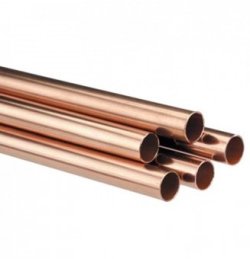
When designing engineering systems, special attention is paid to the quality of materials, on which the reliability and service life of communications depend. One of the most popular types of non-ferrous metal products remains copper pipe, which combines high strength, corrosion resistance and excellent performance characteristics. Due to their properties, copper pipes are successfully used both in domestic construction and industrial facilities.
Despite the emergence of a large number of modern materials, copper continues to occupy an important place in the production of pipeline systems. This metal is known for its durability and ability to maintain performance for decades.
Main features of copper pipes
Copper pipes are made from high-quality alloys with a high copper content. The material has good ductility, which facilitates installation and allows you to create pipelines of various configurations.
In addition, copper has high thermal conductivity and resistance to temperature changes, making it suitable for use in heating and hot water supply systems.
Benefits of using copper
- long service life;
- corrosion resistance;
- high mechanical strength;
- resistance to temperature changes;
- excellent thermal conductivity;
- environmental safety;
- ease of maintenance.
These qualities allow the use of copper pipes in the most critical engineering systems, where reliability is of paramount importance.
Application in water supply systems
One of the most common areas of application of copper pipes is the organization of cold and hot water supply systems. The material does not emit harmful substances and does not affect the quality of water, which makes it safe for use in residential and public buildings.
Copper pipelines can withstand high pressure and maintain tightness even during intensive use.
Role in industry
In industrial enterprises, copper pipes are used to transport various liquids and gases, as well as as part of refrigeration equipment, air conditioning units and process lines.
High resistance to aggressive environments makes rolled copper in demand in the energy, mechanical engineering and chemical industries.
Application in air conditioning systems
Almost all modern air conditioning and refrigeration systems use copper piping. This is due to their ability to withstand