

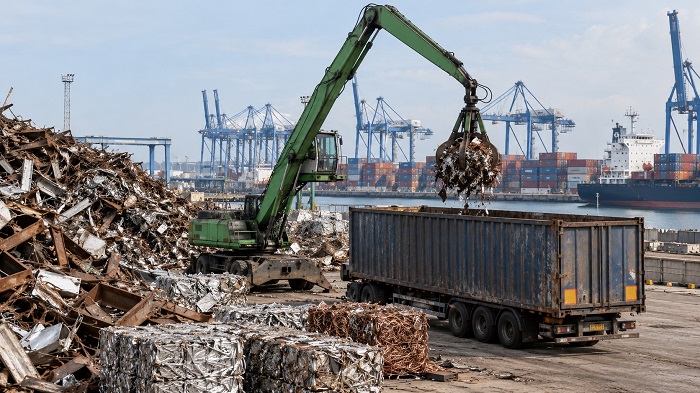
German associations BVSE and the Circular Metal Association (CMA) say the European Commission’s proposed restrictions on metal scrap exports to non-OECD countries could breach EU law and weaken Europe’s recycling industry. That is the conclusion of a legal opinion prepared by law firm Okl & Partner on behalf of the two organizations.
Under the new rules, from May 21, 2027, certain types of non-hazardous waste could be exported to non-OECD countries only if those destinations are on a list approved by the European Commission. The associations are challenging the criteria Brussels proposes to use to restrict exports of some categories of ferrous and non-ferrous scrap.
Legal objections to the proposal
The main objection concerns the assessment of environmental risks associated with heavy metals. BVSE and CMA note that Article 39 of the EU Waste Shipment Regulation already bans exports of hazardous waste to non-OECD countries, while the proposed list concerns materials classified as non-hazardous. The associations argue that the Commission is applying criteria inconsistent with the classification of the waste in question.
The organizations also consider the restrictions disproportionate: the regulation already requires independent audits of receiving facilities to verify compliance with EU environmental standards. They also criticize the blanket approach to different scrap categories, citing the classification of some metal waste on the “Green List”, which indicates a low level of hazard, and the Basel Convention’s technical guidelines on metal recycling. In their view, the Commission has not sufficiently taken these provisions into account.
Market risks and possible legal action
BVSE and CMA warn that the restrictions could worsen a surplus of scrap in Europe. In their assessment, local companies cannot process all the material collected, making export markets an important outlet. Reduced access to those markets could lower prices, weaken companies’ profitability and discourage investment in collection and recycling.
The associations say the competitiveness problems facing Europe’s steel industry should be addressed by reducing energy costs, improving production conditions and encouraging investment—not by restricting exports. On October 19, the Bureau of International Recycling (BIR) also called for the proposal and its rationale to be reconsidered. It asked for an extension of the public consultation period so that the countries concerned could submit further information in support of their applications for inclusion on the list.
BVSE and CMA want the proposal revised to allow exports to all countries that meet the requirements of the regulation. They have not ruled out legal action if the list is adopted in its current form. The final list of authorized non-OECD countries is expected by November 21, 2026.

There are no comments yet.