

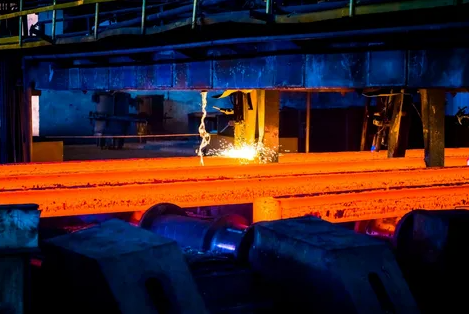
The global market for high-quality iron ore is expected to expand significantly as the steel industry accelerates its shift to low-emission production technologies, according to a report by the US-based Institute for Energy Economics and Financial Analysis (IEEFA).
This shift is being driven by the increasing adoption of direct reduction (DR), which is becoming a key path to decarbonizing steel production.
Growing demand associated with steelmaking DRI-based
The report highlights that DR-based steelmaking requires higher quality iron ore, especially DR-grade material, to produce low-emission steel. As metallurgists move away from the traditional blast furnace route, demand for these higher-quality materials is expected to skyrocket. IEEFA noted that this structural shift is changing raw material requirements in the global steel industry.
Despite growing investment, supply is not expected to keep pace with demand. IEEFA forecasts a global supply shortage for DR grade iron ore, with shortages emerging in the coming years and potentially widening beyond 2030. Under certain scenarios, the shortage could reach 16.4 million tons by 2034.
Established suppliers in Canada, Brazil and the Nordic region are already ramping up production of high-quality iron ore, while new projects are being developed in Africa and the Middle East.
At the same time, large miners are pursuing:
- expansion of capacity by


There are no comments yet.