

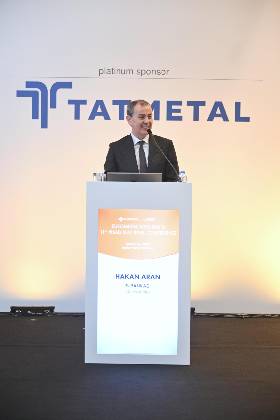
Mr. Aran said that from a political and geopolitical point of view, the trade policy being developed by the United States against China, the development of events along the Russia-Iran-China axis, as well as the conflicts in Syria, the Gaza Strip and Ukraine in recent years should be analyzed together. He said efforts were being made to remove China from its position as the world's only manufacturing hub, and that India and Turkey were expected to take on a significant role in the process. Aran noted that India's decision to raise its steel production plan for 2030 from 200 million tons to 300 million tons is a clear indication of this change in positioning. He alsostated that, in addition to the potential created by the reconstruction of Syria,Türkiye It can fill the void left by Iran, a key supplier of iron and steel to the Persian Gulf countries, due to the ongoing war.
According to Aran, prices are shaped by the daily flow of news related to the war in Iran, but the main problem is the oil-related supply shock. According to him, the reduction in supplies corresponds to 20 million barrels of oil reserves, 40 percent of which goes to China. Aran warned that if the war lasts longer than two months, it will mean a catastrophe for the global economy, and therefore there is hope that the crisis in the region will normalize before that moment. He stressed that these events will also have consequences for the Turkish economy, saying that if the upward trend in energy prices becomes permanent, the current account deficit could reach at least $50 billion by the end of the year, the budget deficit could rise to four percent of GDP, and the Treasury may need about 500 billion Turkish liras per year. in the form of additional borrowings. He also




There are no comments yet.