

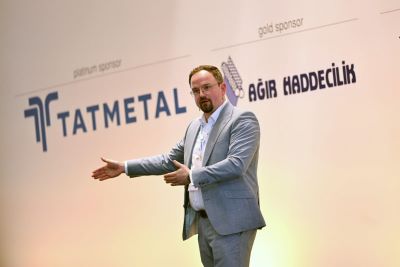
Speaking at the Eurometal Steel Day and 11th YISAD Flat Steel Conference, held at the Istanbul Marriott Hotel Asia on Tuesday 24 March, in collaboration with SteelOrbis, Lars Hillmann, lawyer/consultant at law firm Cattwyk, provided an overview of the legal framework and the expected market impact of EU steel trade measures following the introduction of EU safeguard measures.
Recalling that The EU's current steel protection system came into force in 2018 and expires on June 20, 2026, reaching the maximum eight-year period allowed under WTO rules. Mr Hillman noted that the European Commission was preparing a new trade measure to replace the existing protection system. per year, compared with about 34 million tons under current measures, representing a 47 percent reduction in import volumes. The new structure is expected to introduce an out-of-quota tariff of 50 percent, doubling the current 25 percent duty applied under safeguard measures. Hillmann noted that this change would mean a significant tightening of EU trade protection measures for steel imports.
Unlike current protection measures, the new measure will be permanent, without a predetermined validity period. “This is a permanent measure... We have a permanent measure because there is an ongoing problem,” he said. The new system is expected to take effect on July 1, 2026, immediately after existing guarantees expire.
The “melt and pour” rule changes origin requirements
Hillmann highlighted the introduction of the “melt and pour” rule, which will require importers to prove the country in which the steel was originally melted and cast. According to Hillman, the "melt and pour" criteria will not be another part of the "rules of origin", but will be independent of them. This requirement will determine country-specific access to quotas and is expected to increase administrative complexity at customs level.
Meanwhile, the proposed system will apply to all countries (erga omnes), with the exception of EEA countries. Hillmann stressed that FTA partners would be included and developing country exceptions would be eliminated, representing broader coverage than the current safeguard regime.
He noted that negotiations would be required with multiple WTO members, compensation may need to be offered, and trading partners could retaliate if an agreement is not reached. “If there is no agreement, trading partners are free to take countermeasures as they see fit,” he said.




There are no comments yet.