

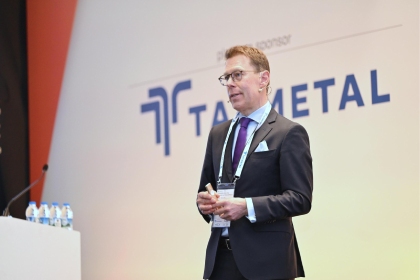
Speaking at the Eurometal Steel Day and YISAD Flat Steel conference held in Istanbul on March 24, Alexander Julius, President of EUROMETAL, said that the upcoming EU steel trade measures and the Carbon Border Management Mechanism (CBAM) are expected to lead to higher steel prices in Europe.
According to Julius, the new EU measures should replace existing safeguards after June 30, 2026 and effective July 1, 2026 will significantly restrict supply. The planned halving of import quotas is expected to lead to a one-sided deficit in the market.
High tariffs are considered a major barrier to trade
Julius stressed that a 50 percent tariff outside the quota is “unpalatable” for market participants. Once import quotas are exhausted, companies importing steel into the EU, including from Turkey, will be required to pay the full tariff, which cannot be absorbed or passed on to customers. He called this a critical issue for future trade relations, especially given the quarterly quota system under which importers could face tariffs early in the period.
CBAM increases price pressures across the value chain
In addition to trade measures, Julius stressed that CBAM is already driving up steel prices in Europe. He noted that this mechanism increases costs not only for European steel producers, but also for importers and end users, as carbon costs flow through the value chain. At the same time, uncertainty remains over emissions calculation methodologies and regulatory definitions, creating additional challenges for market participants.
Steel imports cause competitiveness problems
Julius also pointed to the growing influx of steel-based products into the EU, which are often not subject to the same duties, carbon costs or protections measures. This situation is seen as undermining the competitiveness of European manufacturing as companies increasingly move production outside the EU and re-import finished components. According to industry data, the automotive sector accounts for about 40 percent of such imports.
Turkish exporters face uncertainty
From the perspective of Turkish exporters, Julius noted that uncertainty among EU buyers remains high




There are no comments yet.