

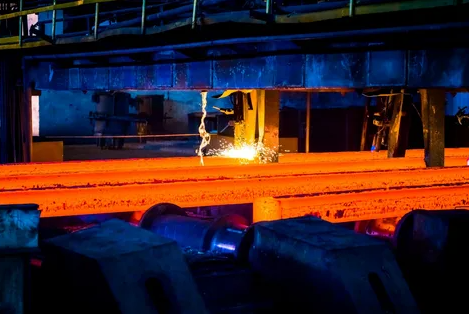
German steel company Thyssenkrupp Steel has announced a €2.4 million investment to expand its laboratory infrastructure at its Duisburg-Schwelgern site to support the evaluation of iron ores for future low-carbon steel production. The project is part of Thyssenkrupp Steel's ongoing efforts to transition to low-emission steel production, with a focus on improving raw material quality control and process optimization.
The new facility is part of the company's broader transition to climate-neutral steel production, with a particular focus on testing raw materials for hydrogen-based direct reduction (DR) processes. The facility will evaluate key properties such as recovery behavior, fracture resistance and tendency to stick or agglomerate during processing.
Supporting hydrogen-based steel production
Thyssenkrupp Steel said the new laboratory will simulate realistic hydrogen-based operating conditions, allowing for more accurate assessment of future raw materials. Test conditions will reflect an increase in hydrogen content over time in line with the company's planned transition to hydrogen steel production.
Two test furnaces will also allow for steam injection experiments, helping to better understand reduction rates and process performance.
The company stressed that its future production route will combine direct reduction and electric smelting, allowing greater flexibility in raw materials

There are no comments yet.