

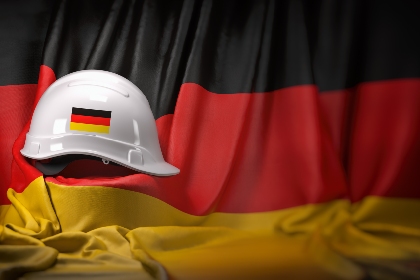
According to the Federation of German Industry (BDI), Germany's industrial sector is unlikely to recover in 2026, with production expected to stagnate at best. The warning was announced by BDI President Peter Leibinger at the opening of the Hanover Fair.
Prolonged decline in production
Industrial production has been declining every year since 2022, and the sector is currently entering a prolonged period of weakness. The Association revised down its forecast, citing a weak start to the year and growing geopolitical risks.
Energy costs and geopolitical risks add to the pressure
The ongoing conflict related to Iran is increasing tensions due to rising energy prices, supply chain disruptions, and inflationary pressures. According to BDI, continued delivery disruptions may lead to a decline in industrial production for the fifth year in a row.
Structural weaknesses limit recovery
The current downturn reflects deeper structural problems, with industrial production remaining well below historical levels. Capacity utilization is just over 78 percent, indicating limited recovery momentum, while Germany continues to lose ground compared to fast-growing economies.
High costs undermine competitiveness
Leibinger emphasized that structural cost pressures, including labor costs, taxation, regulatory burdens, and energy prices, are the main drivers of the downturn. He noted that geopolitical upheavals reinforce rather than cause these major problems.
The BDI called on the government to present a broad package of reforms by the summer, focusing on tax breaks, investment incentives and reducing bureaucracy. The association stressed that short-term financial support measures will not be enough to restore sustainable growth.


There are no comments yet.