

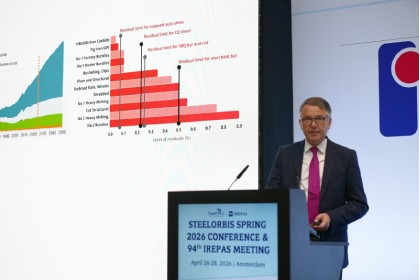
Hydrogen-based DRI is becoming increasingly important on the path of decarbonization
Dr. Atherton stated that the steel industry is increasingly focusing on reducing carbon dioxide emissions, with direct reduction iron (DRI) becoming a key driver of low-carbon steel production. He noted that hydrogen-based DRI, in particular, is widely seen as the optimal way to achieve deep decarbonization goals of up to 80-90 percent, although natural gas-based production is expected to remain dominant until hydrogen becomes cost-competitive.
He stressed that the transition to more environmentally friendly production routes is due to both the goals of sustainable development and the need to minimize the impact of raw materials on the environment. However, he warned that the transition to production based on DRI and electric arc furnaces (EDP) could create new problems, especially regarding the availability and quality of scrap. He stated that although scrap will continue to play a crucial role in the closed-loop economy, impurities and limited supply mean that DRI will remain an important resource even in scrap-rich regions.
Doctor. Atherton also noted that progress in steel decarbonization has so far failed to meet previous expectations, and several announced projects have faced delays or cancellations. He noted that although a significant increase in DRI's global capacity is projected, less than half of the announced capacity is currently under construction, reflecting uncertainty related to investment decisions and political support.
Costs, shortages of raw materials, and policy gaps are slowing the transition
Addressing cost concerns, the IIMA Secretary General stated that the transition to hydrogen-based production routes requires significant capital expenditures, with an estimated investment of up to $1.5 trillion in Europe alone. He added that switching from natural gas to clean hydrogen could significantly increase production costs, making policy support mechanisms such as carbon pricing critical to bridge the gap.
He stressed that accessibility




There are no comments yet.