

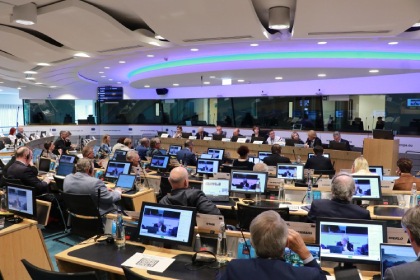
An intersectoral debate organized by the Employers' Group of the European Economic and Social Committee has raised concerns that the EU's proposed Industrial Acceleration Act (IAA) may not achieve its goals without significant changes.
Participants included the European Steel Manufacturers Association (EUROFER), Cement Europe, the European Automobile Manufacturers Association, and European Aluminum.
Lack of clarity creates uncertainty
The main problem is the lack of clear definitions of important concepts such as "low carbon materials" and "Made in Europe". Industry representatives warned that without harmonized definitions, companies face uncertainty about compliance and investment decisions, especially in capital-intensive sectors such as the steel and cement industries.
Stakeholders highlighted the risk of excessive administrative burden, noting that complex reporting, certification, and compliance requirements could turn the IAA into a bureaucratic structure rather than a practical demand-driving tool. This can delay investment decisions and slow down the pace of industrial decarbonization.
A unified approach is questionable
The participants also criticized the horizontal structure of the IAA, arguing that it does not reflect the realities of a particular sector. Industries vary significantly in cost structure, exposure to global competition, and dependence on government procurement, which raises doubts about the effectiveness of a unified policy approach.
The main drawback identified is the lack of attention to the main structural problems, especially the high energy costs. Industry representatives stressed that demand-side measures alone are not enough to restore competitiveness without eliminating the main cost factors.
Global competition increases pressure
The EU's approach contrasted with more coordinated industrial strategies in competing regions that combine subsidies, local content rules, and simplified regulation. By comparison, the EU's structure has been described as fragmented, potentially weakening its global competitiveness.
Concerns about governance were also raised.,




There are no comments yet.