

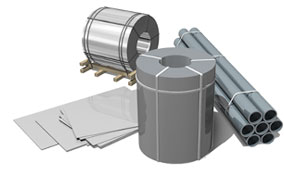
The agreement expands on the partnership Hanwha entered into in April with APMA, a promising joint venture for the production of military ground equipment. Hanwha offers to produce various equipment, including mobile howitzers and infantry fighting vehicles, manufactured in Canada using domestic steel. Flavio Volpe, president of APMA, estimated that the resulting activity would be equivalent to the creation of one new automobile plant, providing approximately 15,000 direct jobs and another 15,000 indirect ones.
Both agreements depend on whether Hanwha wins a federal contract to supply the Royal Canadian Navy with a fleet of 12 submarines, estimated to cost tens of billions of dollars. The South Korean company competes with the German TKMS. Prime Minister Mark Carney said his government would decide between the two proposals by the end of the month.
Glenn Copeland, CEO of Hanwha Defense Canada, said that planning for the production of vehicles will begin immediately if the company receives a contract for the submarine.
The announcement was made at Martinrea International's facility in Vaughan, Ontario, along with a senior South Korean delegation, including the President's chief of staff, who framed the commitment as a complete Canadian supply chain from raw materials to the finished car.
In January, Algoma Steel permanently closed the blast furnace, ending 125 years of integrated coal-based steel production, and now produces all of its liquid steel on a new electric arc furnace platform, which is expected to reach an annual crude steel production capacity of approximately 3.7 million tons after full commissioning. The company has focused its commercial strategy on wafers, where its status as the sole manufacturer gives it a unique position while reducing coil production. Sales of rolled steel reached a record 116,000 net tons in the first quarter of 2026.
For Algoma, the agreement offers a potential lifeline. Company
There are no comments yet.