

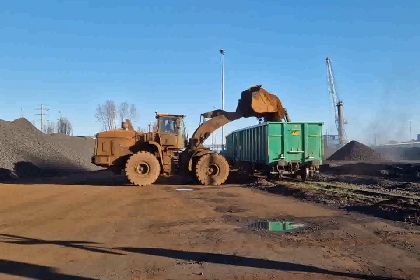
ArcelorMittal Poland announced that its steelworks in Dąbrowa Górnicza received the largest shipment of iron ore in the plant's history, transported from the port of Swinoujscie.
It was also the heaviest iron ore train ever to arrive at the steelworks on the European gauge railway network, carrying more than 3,000 tons of iron ore for 49 wagons.
New wagon configuration increases throughput
The record shipment was achieved thanks to the cooperation of the company's raw material logistics and railway procurement departments with logistics partners. According to the company, the new train configuration allows up to 40 percent more iron ore to be transported per load compared to standard trains, reducing the number of trips required while reducing costs and environmental impact.
Witold Chickiewicz, logistics project manager at ArcelorMittal Poland, said using shorter cars allowed the company to increase the number of cars per train without exceeding maximum permitted train length. As a result, each wagon carried an average of 64 tons of iron ore, making it possible to transport more than 3,000 tons in one trip. Standard ore trains typically carry 2,200-2,300 tons.
Additional transport tests show positive results
Przemyslaw Smola, manager of raw materials logistics, said the new train configuration allows for the transport of larger volumes of raw materials using the same number of logistics operations, increasing economics efficiency, infrastructure utilization and supply stability.
Since May, ArcelorMittal Poland has also been carrying out additional transport tests. Iron ore trains arriving from the Medyka transhipment terminal on the Polish-Ukrainian border reached an average load of 2,900 tonnes, more than 25 percent higher than previous shipment levels.
ArcelorMittal Poland says higher loading capacity could improve the efficiency of its raw material supply chain and reduce the number of trains needed for supplies iron ore and other raw materials from the Dombrov-Gurnich metallurgical plant. materials.



There are no comments yet.