

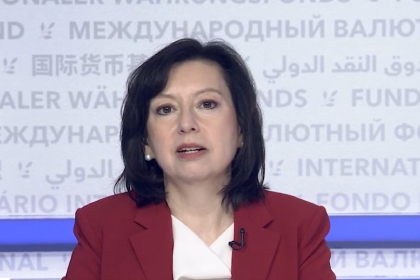
Kozak stated that the conflict has once again tested the resilience of the global economy, and reiterated that the IMF continues to assess events through three main transmission channels: commodity prices, especially oil; the effects of the second round on inflation and inflation expectations; and financial conditions. She added that countries that are net energy importers and have limited budget or currency buffers remain the most vulnerable to the economic consequences of higher energy prices.
Commodity markets are recovering, but normalization will take time
Discussing the latest developments in the commodity markets, Kozak said that oil prices have fallen from recent peaks and are now about 10 percent above pre-war levels. She added that prices for natural gas, jet fuel, non-ferrous metals, urea and some fertilizers have also decreased.
However, Kozak warned that the full normalization of commodity markets will take time, as maritime routes and supply chains need time to recover after the opening of the Strait of Hormuz in accordance with the memorandum of understanding between the United States and Iran regarding the restoration of peace between the parties. According to Kozak, the prospects also depend on the durability of the current ceasefire.
The IMF will update global forecasts in July
Kozak said that inflation expectations generally remain firmly anchored despite the recent turmoil, although some central banks have tightened monetary policy, while others have kept interest rates unchanged. She added that financial conditions remain favorable, and relatively low sovereign spreads allow many emerging and developing countries to continue accessing international capital markets.
The IMF will publish a comprehensive reassessment of the global economic outlook, including updated forecasts, in its July 8 issue of World Economic Outlook.




There are no comments yet.