

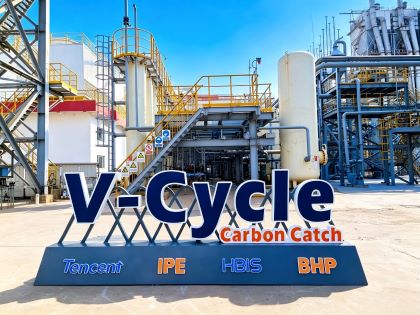
Steel remains one of the world's most important materials, producing almost 2 billion tons annually, according to Australian mining company BHP. More than 70 percent of global steel production is now based on the blast furnace-blast-oxygen furnace (BF-BOF) route, while most of the remainder is produced via the electric arc furnace (EAF) route.
BHP said its steel decarbonization program supported multiple technology pathways and highlighted the modified blast furnace route as a key emissions reduction option. This path preserves the traditional BF-BOF production process, combining technologies such as top gas processing, hydrogen injection and carbon capture, utilization and storage (CCUS) to achieve significant emissions reductions.
Blast furnaces must remain central to steel production
The company said blast furnace decarbonization remains technically complex, capital intensive and at an early stage of commercialization, making collaboration essential. BHP is working with steelmakers, technology companies and research institutions to accelerate development through pilot projects and pre-commercial demonstrations.
BHP noted that the BF-BOF route remains dominant as it is cost-effective, flexible and capable of processing a wide range of iron ore grades to produce both commodity and specialty steels. In contrast, the EAF pathway relies on scrap or direct reduced iron (DRI), with only about three percent




There are no comments yet.