

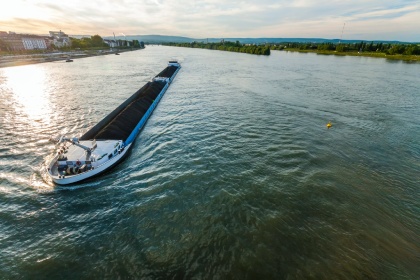
The German Steel Federation (WV Stahl) has called for concrete measures to address the effects of sustained low water levels on Germany's industrial logistics and competitiveness following a high-level meeting convened by Federal Minister of Transport Steffen Bilger.
As SteelOrbis reported earlier,the water level in the Kaube on the Middle Rhine recently dropped below the previous record low recorded in 2018. The situation resulted in approximately three times as many trips requiring transportation of only about one-third of the normal volume of cargo carried by inland navigation vessels, increased transportation costs and a further tightening of available shipping capacity.
inland waterways handle third of German steel transport
Kerstin Maria Rippel, President of the PMR, in turn, said that the current low water levels, which pose serious problems for the industry, threaten the security of supplies and competitiveness of Germany as a place of business. According to Rippel, about a third of the transportation volume in the German steel industry is carried out by inland waterways, which makes inland navigation indispensable for the industry.
German steel companies have taken precautionary measures based on their experience of previous periods of low water, including the creation of additional storage facilities and the development of more flexible logistics chains. However, In.
In. Stahl stressed that individual companies cannot independently compensate for the structural deficiencies of Germany's transport infrastructure.
We call for more efficient alternatives to rail перевозкам
Against this background, Rippel called for optimizing cargo handling, traffic on the Middle and Lower Rhine should be accelerated, while rail transportation should be strengthened as a reliable alternative. She also called for additional road and rail transport capacities to be deployed in crisis situations.
Rieppel stressed that discussions should be followed by concrete measures and a mandatory timetable for their implementation, warning that low water levels should not become a permanent competitive disadvantage for German industry.




There are no comments yet.