

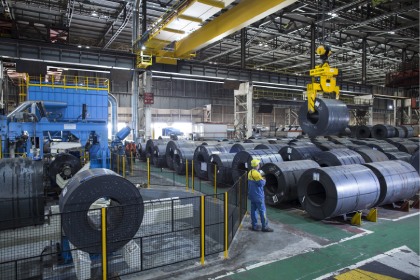
The Tata Steel UK plant in Llanwern, South Wales, is reportedly operating at about half its capacity amid increased competition from steel imports at lower prices following a change in duty-free steel import quotas in the UK, according to a company announcement published by The Guardian.
The Llanvern plant, which annually produces about 600,000 tons of galvanized steel, which accounts for almost half of the demand in the UK, has been experiencing a shortage of orders to ensure the smooth operation of its production lines. It is reported that employees are tasked with maintenance and cleaning during periods of production line downtime.
Higher quotas for galvanized steel increase competition for импорт
Although the UK imposed 50 percent tariffs on steel imports exceeding duty-free quotas in July, quotas for some galvanized steel suppliers were lowered. increased. India's quota increased from 98,000 tons to 125,000 tons, while Vietnam's quota more than tripled from 51,000 tons to 174,000 tons. South Korea was allocated a quota of 100,000 tons.
Tata Steel UK has expressed its concern to the UK Government about the current situation. Russell Codling, commercial director of Tata Steel, said that the new quotas have already significantly affected the operation of the Zodiac galvanizing line in Llanvern and that the current situation is not sustainable.
Pressure on Llanwern raises concerns about transition Порт-Талбота
Meanwhile, concerns have been raised that continued pressure on Tata Steel's processing plants could also affect the company's transition period to smelting steel in electric arc furnaces at the Port Talbot plant. Tata Steel is investing 1.25 billion pounds, including a government grant of about 500 million pounds, in a three million ton electric arc furnace in Port Talbot.
The UK trade union community also called on the government to take tougher measures to protect Llanwern, highlighting the plant's role in supplying galvanized steel to the automotive and construction industries.
The UK government has said its steel trade measures are designed to balance protecting domestic production with maintaining reliable supplies. It added that the volume of imports of the relevant product category is currently below the established quotas and that monitoring of the impact of this measure will continue. The quota system is scheduled to be reviewed in 12 months.




There are no comments yet.