

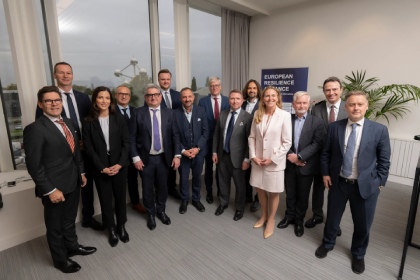
The European Resilience Alliance for Clean Hydrogen & Derivatives (ERA) has called on the EU and national governments to provide targeted financial support and make regulation more predictable to accelerate investment in clean hydrogen production, infrastructure and industrial use. Its proposals are set out in a newly published guide to financing projects across the hydrogen value chain.
ERA says Europe has built up a substantial pipeline of projects, but uncertainty over demand, revenues, infrastructure development and technology deployment is preventing many from reaching final investment decisions. Since the alliance published its first white paper in April 2026, several EU member states have made further progress in implementing RED III, and additional clean hydrogen projects have received final investment approval. The alliance says more is needed to unlock large-scale industrial investment.
Three financial mechanisms
The first proposal is publicly supported two-sided auctions. These would connect hydrogen producers and consumers through competitive bidding and help secure long-term supply contracts. Public funding would cover only the gap needed to make individual deals commercially viable.
The second mechanism is contracts for difference for hydrogen midstream operators. These would allow operators to aggregate fragmented supply and demand, with financial support covering the resulting funding gap.
The third proposal concerns spreading the cost of hydrogen transport networks over time. Transport tariffs would remain affordable and predictable at the outset, while infrastructure costs would be recovered over a longer period through financing and government or EU guarantees.
ERA says the mechanisms would address risks that individual market participants cannot currently manage effectively and help establish a hydrogen market in its early stages. The alliance also called for coordinated investment in production, transport and consumption, noting that delays in one part of the value chain can undermine the viability of projects elsewhere.
Regulation, the alliance says, should create stable and predictable demand, particularly in sectors where emissions are difficult to reduce. Public support should be targeted and temporary: as the market matures, commercial risks and the additional costs of clean hydrogen should be borne by market participants.
ERA includes, among others, Stegra, thyssenkrupp, RWE Generation, Enagás, Gasunie and Hydrogen Europe. It urged EU institutions and national governments to introduce the proposed mechanisms and make regulatory conditions more predictable.




There are no comments yet.