

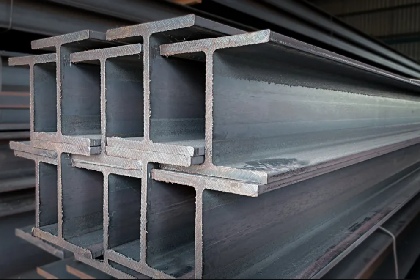
According to the coalition, the use of environmentally friendly steel in the German railway network can significantly contribute to the achievement of national decarbonization goals. The coalition agreement of the current government has already committed to review the procurement law to give priority to low-emission base materials, with Deutsche Bahn expected to act as a leader.
Dirk Flege, managing director of the German transport association Pro Rail Alliance, said that the use of German or European-made "green steel" in the construction or modernization of railways can help avoid the emission of up to 100 tons of carbon dioxide per kilometer of track. This corresponds to about 33,000 tons of prevented emissions on a route such as Hamburg-Berlin. Despite this potential, so far only a small number of individual pilot initiatives have been implemented.Examples abroad show that the transition is feasible
Environmental groups, including the German Nature Conservation Ring, stressed that Belgium and France are already demonstrating the practical, real-world use of green steel in rail transport. They argued that Germany's adoption of low-emission steel in major public infrastructure projects would send a strong message to the whole of Europe, reinforcing the view that climate neutrality and industrial competitiveness can develop together.
Trade unions and industry are calling for local content and stronger political signals
Jurgen Kerner, the second chairman of the metalworkers' union IG Metall, stressed that public infrastructure funds should directly support domestic steelworkers by linking local content.
CEO of the German Steel Federation (WV Stahl) Kerstin Maria Rippel added that the rapid creation of leading markets is important.




There are no comments yet.