

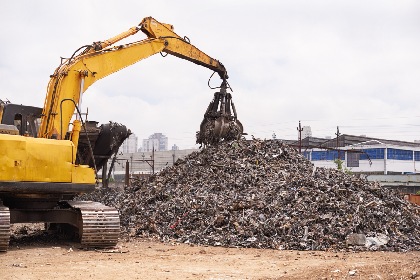
According to calculations made by the Bureau of International Recycling (BIR) and the World Steel Association (Worldsteel), global steel production uses about 630 million tons of recycled steel each year. This level of scrap recycling prevents nearly 950 million tons of carbon emissions per year, while also reducing energy consumption and conserving natural resources.
The production and use of direct reduced iron (DRI), another key raw material for low-carbon steel production, has also expanded. Global DRI production increased by 5.1 percent year-on-year between January and September 2025, reaching 95.375 million tonnes. India remained the largest producer, with production rising 8.4 percent to 43.761 million tons, followed by Iran, where production rose 1.7 percent to 26.550 million tons.
Diverging trends in major steel markets
Recycled steel consumption trends varied across the leading steel-producing countries between January and September 2025.
China remained the largest consumer during the period, despite a 13.3 percent decline in recycled steel use to 142.21 million tons, compared with a three percent decline in crude steel production to 746.3 million tons.
In India recorded strong growth during the period under review, with recycled steel use rising 16 percent to 29 million tons, outpacing crude steel production growth of 10.5 percent to 122.4 million tons. Türkiye also showed growth, increasing its consumption of recycled steel




There are no comments yet.