

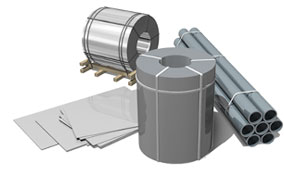
Italian steel group Marcegaglia, one of the leading steel processors in Europe and a major producer of welded pipes, rolled products and stainless steel products, has announced an additional investment of 600 million euros in the development of its production site in Fos-sur-Mer in southern France as part of the Mistral project. project. Thanks to this new allocation, announced during the Choose France summit, the total planned investment in the French industrial complex will grow to about 1.2 billion euros.
The project involves the transformation of the former Ascometal plant, acquired by Marcegaglia in 2024, into an integrated steel and hot-rolled production facility. The investment is expected to significantly increase production at the plant, with annual liquid steel production expected to increase from the current 100,000-150,000 tons to about 2.1 million tons by mid-2028. The rolling capacity is expected to reach 3 million tons per year.
According to market sources, the project includes the modernization of an existing electric arc furnace and the installation of new technologies for the production and rolling of carbon and stainless steel. Upon completion, the new industrial plant is expected to enable Marcegaglia to cover a significant portion of its domestic roll and slab needs, with the material primarily intended to supply the group's processing plants in Italy.
As previously reported by SteelOrbis, in April Marcegaglia signed a contract with Danieli worth about 450 million euros, including implementation and spare parts, for the supply of basic technologies for a new steel complex in Fos-sur-Mer. The agreement is part of Marcegaglia's broader strategy to strengthen extractive industry integration, improve supply chain control, and support decarbonization of the manufacturing process. In the energy sector, the project will be supported by an agreement signed with the French energy company EDF to supply nuclear-powered electricity on competitive terms for at least 10 years. The use of decarbonized electricity, together with scrap and low-carbon raw materials such as DRI and HBI, is expected to significantly reduce emissions compared to traditional integrated routes.

There are no comments yet.