

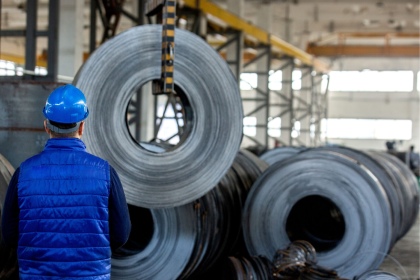
While CBAM aims to prevent carbon leakage by equalizing carbon import costs with those faced by EU producers, Dutch steel importers warn that the current implementation structure creates significant uncertainty and cost risks.
Imports made in 2026 will be financially settled only in 2027. However, the lack of a clear and operational verification procedure leaves importers unsure of the actual carbon costs they will eventually face. As a result, pricing decisions become more complex and higher costs are likely to be passed on to customers in the Dutch manufacturing sector. The situation is further complicated by the fact that a comparable carbon charge has not yet been introduced for many processed products, raising concerns about potential distortions in competition.
Operational and administrative problems
Companies report numerous operational difficulties related to CBAM compliance. The system is described as complex, and existing calculation tools and standard emission values are considered to be insufficiently consistent with actual production data.
In some cases, long-term contracts have become economically unviable due to sharply increased carbon cost assumptions.



There are no comments yet.