
The production of complex metal structures, parts or elements is a multi-stage process that ideally should take place at one enterprise. A full cycle metalworking service means that the project goes from a digital drawing to the final design under the roof of one manufacturer plant.
Why is this approach more profitable, fast and reliable for business? Let us examine in detail how exactly this process occurs and what advantages it provides to the end customer.
Digital preparation: foundation of the project
The production of any metal structure begins in the engineering department, when the idea is turned into an exact model of the product.
1. Engineering audit and material selection
First, a detailed analysis of the technical specifications (TOR) is carried out: engineers perform a technological audit of the drawing, which consists of the following points:
- checking how effective the design will be in production;
- the ability to minimize the number of welds;
- compliance with the selected material and actual operating conditions.
2. Optimization and CNC programming
After the audit and approval of the technical specifications, the following work is performed:
- optimization of cutting: to reduce the cost of ordering, parts are placed on the metal sheet as tightly as possible.
- simulation: simulates the cutting and bending process to identify and eliminate potential errors before metal processing begins.
Primary processing: cutting and forming
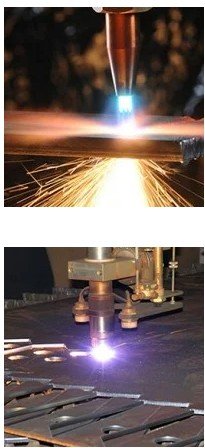
At this stage, the transformation of a large sheet of metal into finished flat blanks occurs. And here the choice of cutting technology is extremely important.
If the manufacturer has all three technologies, the methods can be combined: the main shape is cut with plasma, and the precise holes are made with a laser.
Machining is the next stage of work
After cutting, the workpieces undergo subsequent processing stages, among which manufacturers distinguish the following:
Bending and turning and milling work
To obtain three-dimensional parts, sheets of metal are bent on CNC press brakes. This allows you to create complex profiles with a minimum number of welds. When a part requires the production of cylindrical elements, threads or seats with minimal tolerances, CNC lathes and milling machines are used.
Welding and installation
Welding is a stage that requires high qualifications. All welds undergo visual inspection, and structures undergo additional testing for strength to load.
The final stage of processing parts and structures
Almost