

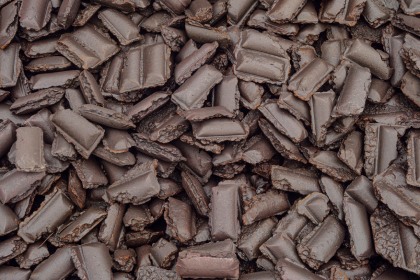
Singapore-based banking and financial services group OCBC has announced an equity investment in the development of a hot briquetted iron (HBI) plant, which will form part of Southeast Asia's largest integrated low-carbon steel production complex. The investment is in Singapore-based Green Esteel Pte Ltd (Esteel) and marks the company's first commercial financing from a financial institution in Asia.
The HBI plant will be located in Sabah province in Malaysia and is scheduled to be operational by 2030. The total investment for the project is estimated at approximately US$1.5 billion and is expected to supply 2.5 million tons of HBI per year.
HBI will serve as a key feedstock for the production of decarbonized steel, allowing for the production of comparable volumes of low-carbon steel. OCBC's equity participation is provided through its Mezzanine Capital division as part of the bank's sustainability investment program, which focuses on green and transition assets, as well as high-growth companies delivering sustainable innovation.
HBI is seen as a critical resource for decarbonized steel production
Steel remains a fundamental industrial material that supports construction, infrastructure and transportation, and supports zero-emission technologies such as wind turbines, solar panels and carbon capture systems. However, according to the World Economic Forum's Net-Zero Tracker report, traditional steel production relies heavily on coal and accounts for about seven percent of global greenhouse gas emissions, making it the most carbon-intensive manufacturing sector.
Low-carbon steel technologies, especially those that replace blast furnaces, can reduce emissions by up to 80 percent. In this context, HBI is increasingly seen as a critical bridge material supporting the transition to cleaner steel production.
The global low-carbon steel market is poised for rapid growth
As economies accelerate decarbonization efforts, demand for low-carbon steel is expected to surge. The Green Steel Industry Report 2025, published by Research and Markets, projects that the global low-carbon steel market will expand at a compound annual growth rate of 21.4 percent from 2024.
There are no comments yet.